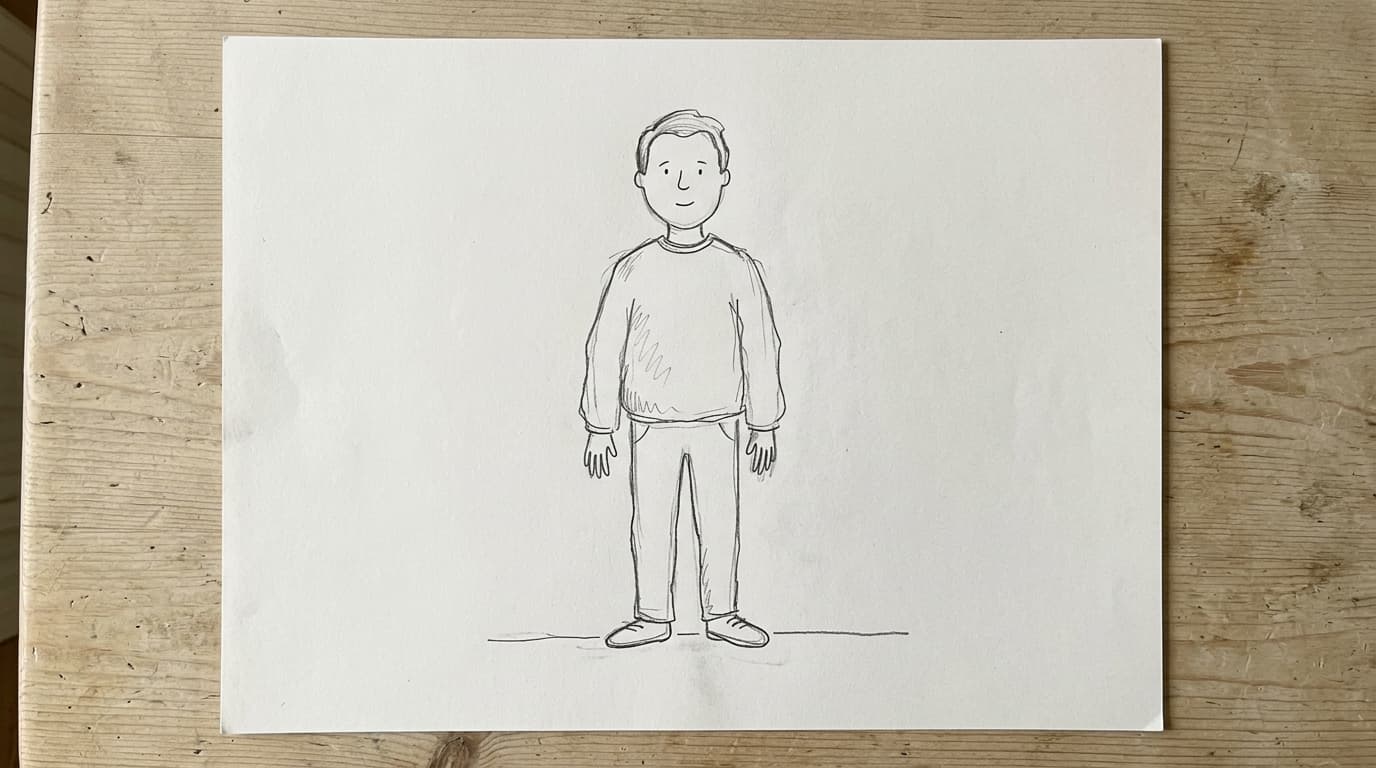
A guided drawing psychology test

Draw-a-Person

Draw a whole person.

Use the Draw-a-Person for historical developmental and cognitive screening research, adapted here for adult self-reflection and adult self-reflection. In InnerCanvas, it helps you reflect on how you present a person through posture, agency, identity, social stance, and selected expressive details. The report describes visible drawing choices and possible meanings cautiously; it does not assign a fixed personality label.

8 minutes

Your draft stays in this browser until you choose to sign in and submit it.Privacy notice

01 - 03

From blank page to useful first read

  1. 01

    Draw or upload

    Choose Draw or Upload, then prepare one clear board for this task: Draw a whole person.

  2. 02

    Follow the task

    Complete the Draw-a-Person task in your own way: Draw a whole person. Artistic skill is not evaluated.

  3. 03

    Read before you pay

    Review a private preview focused on human figure completion, posture, and expressive details; decide whether the complete report is useful to you.

What the report looks at

For Draw-a-Person, InnerCanvas records visible features such as overall figure completeness, proportion, posture, and placement, selective facial, clothing, hand, and foot details. It describes the drawing and its relationships without treating them as proof of a diagnosis, personality trait, or life history.

Where the report stops

Draw-a-Person methods have been used in clinical and developmental contexts, but InnerCanvas does not score IQ, diagnosis, trauma, or personality. The test is best treated as a structured prompt for reflection, not as a standalone psychological assessment.

free online Draw-a-Person test

Can this drawing test tell me anything useful?

What you will draw

The task is simple and specific: "Draw a whole person." Complete it in your own way. InnerCanvas treats the finished image as a starting point for reflection, not as a hidden personality code.

This task has commonly been used as historical developmental and cognitive screening research, adapted here for adult self-reflection.

What the report looks at

  • overall figure completeness
  • proportion, posture, and placement
  • selective facial, clothing, hand, and foot details

What the report can help you do

The report can describe human figure completion, posture, and expressive details, helping you reflect on how you present a person through posture, agency, identity, social stance, and selected expressive details. It organizes image observations, connects them to possible reflections, and gives you questions to answer in your own words.

What the report cannot prove

Draw-a-Person methods have been used in clinical and developmental contexts, but InnerCanvas does not score IQ, diagnosis, trauma, or personality. It does not replace therapy, assessment, crisis support, or advice from a qualified professional.

Questions to take with you

  1. Who is this person in the context of the drawing?
  2. Which detail feels most expressive to you?
  3. What might this person do next?

Questions people ask about this test

What is the Draw-a-Person test for?

It is a guided free online Draw-a-Person test page for adults who want a private drawing reflection. It explains the task, what the report looks at, and where interpretation stops.

Does InnerCanvas diagnose from draw a person test interpretation?

No. InnerCanvas does not diagnose, screen, or verify mental health conditions. The report uses drawing observations for self-reflection only.

Can I see an example before starting?

Yes. The matching sample report uses a product-created drawing and shows how observations, possible reflections, questions, limitations, and sources are separated.

What drawing details are considered?

InnerCanvas focuses on visible features such as overall figure completeness, proportion, posture, and placement, selective facial, clothing, hand, and foot details. These features are described cautiously and are not treated as proof of a trait or condition.

How do I take this drawing test online?

Choose the guided task, draw in the browser or upload one clear image, then review the private preview and sample report. The result is a reflection, not a diagnosis.