Sample Report - Example Only
Draw-a-Person
This example shows the structure and evidence limits of a complete InnerCanvas report. It is not an assessment of the viewer.

Quick Read
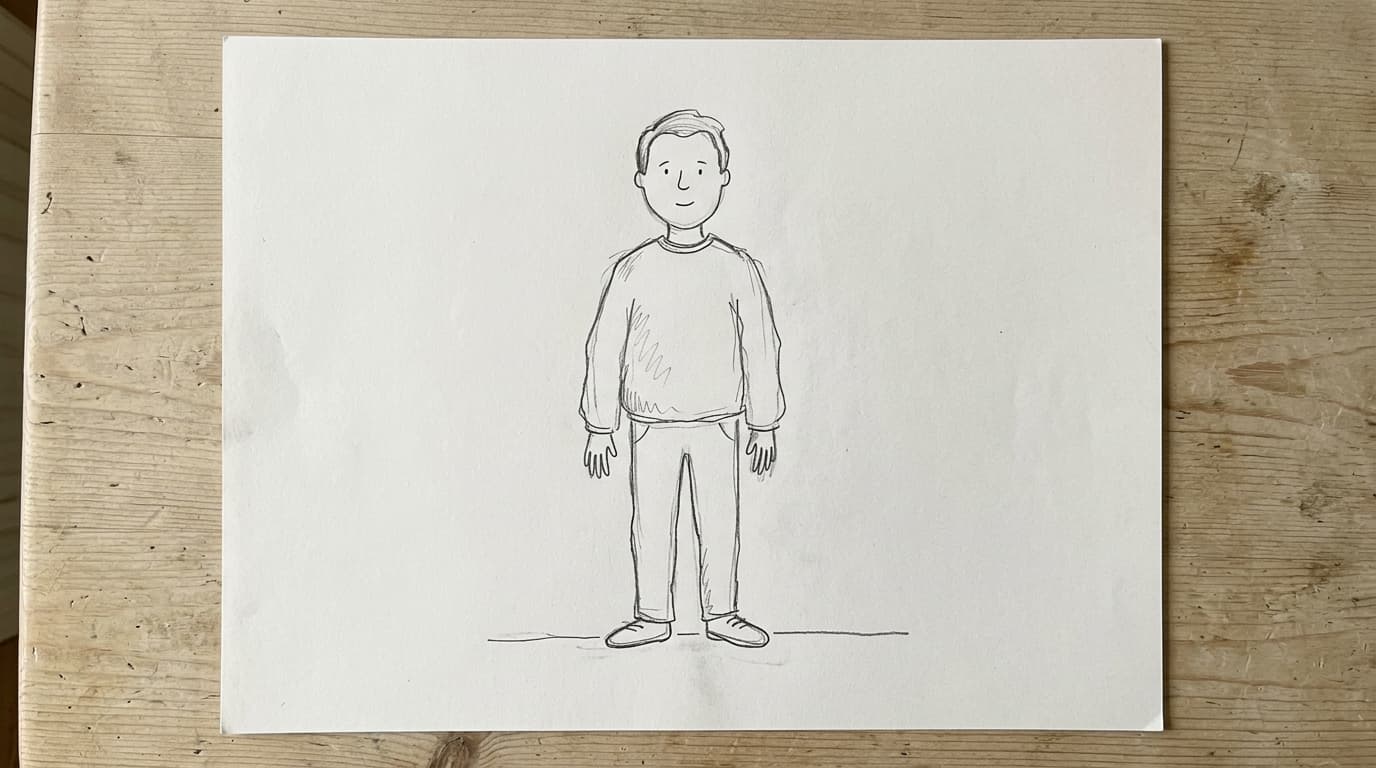
- The drawing features a single, complete human figure positioned centrally on the page, demonstrating a balanced use of space and a clear, frontal orientation.
- Proportions across the head, torso, and limbs are realistically scaled, and the figure is grounded by a clear horizontal line beneath the feet.
- The line work is clean and continuous, with moderate detail in the clothing and facial features, suggesting a deliberate and structured approach to the drawing task.
- While these formal features provide an excellent foundation for personal reflection, scientific evidence does not support using them to infer stable personality traits, emotional disturbance, or clinical diagnoses.
Observation before interpretation
What We Observed
- The figure is placed centrally on the page, both horizontally and vertically, establishing a balanced visual focus.
- The figure occupies a moderate portion of the page, leaving substantial and balanced whitespace on all sides.
- The figure is drawn with balanced proportions, showing a realistic scale relationship between the head, torso, and limbs.
- The lines are clean and continuous, with minimal overlapping or sketchy revisions, except for light shading on the clothing.
- The drawing depicts a complete whole person, including a fully defined head, torso, arms, hands, legs, and feet.
- The figure is in a static, frontal standing pose with arms hanging down at the sides and feet resting on a ground line.
- The drawing features a moderate level of detail, including facial features, hair, clothing folds, pockets, and a horizontal ground line.
Whole-figure overview
The drawing depicts a single, complete human figure positioned centrally on the page. This central placement establishes a strong visual anchor, drawing the viewer's eye directly to the subject. The figure is fully rendered from head to toe, ensuring that all major anatomical regions are represented without omission. This completeness suggests a thorough and systematic approach to the drawing process, where each part of the figure is given deliberate attention.
The figure is presented in a static, frontal standing pose, facing directly forward. This orientation is highly symmetrical and structured, creating a sense of formal presentation. The balanced proportions of the figure, where the head, torso, and limbs are scaled realistically relative to one another, contribute to a harmonious and stable overall composition. This balanced scaling invites reflection on how the creator perceives structure and symmetry in self-presentation.
Head and face
The head is drawn with a rounded, oval shape that is proportional to the rest of the body. It features simple, clearly defined hair outlined along the top and sides, and small, symmetrical ears. The facial features are rendered with minimal but clear lines: two simple dots for the eyes, a small vertical line for the nose, and a gentle, upward-curving line for the mouth, creating a neutral-to-friendly expression. This simplicity in facial rendering ensures that the expression is easily readable and non-threatening.
The clear and open facial expression, combined with the frontal orientation of the head, emphasizes a direct and uncomplicated engagement with the viewer. While some historical projective theories attempted to link specific facial details to personality traits or emotional states, modern research indicates that such features are highly dependent on artistic skill, cultural background, and the immediate context of the drawing, rather than serving as direct indicators of stable psychological characteristics.
Torso and proportion
The torso is connected to the head by a short, simple neck, establishing a clear and direct transition between the head and the body. The shoulders are rounded and lead into a well-proportioned torso that is realistically scaled relative to the head and limbs. The waistline is defined by the bottom edge of the sweater, which sits naturally above the trousers, maintaining a balanced division between the upper and lower body.
The realistic proportions of the torso and its connections to the limbs suggest a well-integrated view of the physical form. There are no exaggerated or minimized body parts, which contributes to the overall sense of stability and realism in the drawing. This balanced proportioning serves as a neutral formal feature that can invite reflection on how one balances different aspects of their life or self-image, rather than indicating any specific psychological trait.
Arms, hands, and action
The arms are positioned vertically along the sides of the torso, ending in open hands with visible, individual fingers pointing downward. This posture is static and non-active, with no indication of movement, gesture, or interaction with external objects. The hands are drawn simply but completely, with each finger clearly delineated, matching the moderate level of detail found throughout the rest of the figure.
The placement of the arms at the sides and the open, downward-pointing hands reinforce the formal, static nature of the pose. This lack of active environmental interaction suggests a moment of pause or presentation. While older clinical interpretations sometimes associated specific hand positions with behavioral tendencies, empirical evidence shows that hand details are heavily influenced by drawing experience and instruction, and do not provide a reliable basis for individual psychological assessment.
Legs, feet, and grounding
The legs are drawn as straight, parallel columns that support the weight of the figure, leading down to feet that point slightly outward. The feet are enclosed in simple shoes, which rest directly on a horizontal ground line drawn in pencil. This ground line extends horizontally past the figure on both sides, providing a clear visual boundary and a sense of physical grounding within the space of the page.
The presence of the ground line and the stable, upright posture of the legs suggest a strong emphasis on grounding and stability. The figure is not floating or disconnected from its environment, but is firmly anchored to a defined surface. This formal feature invites the creator to reflect on their own feelings of stability, security, and connection to their surroundings, though it cannot be used to scientifically measure these states.
Clothing and identity cues
The figure is depicted wearing everyday, casual clothing consisting of a long-sleeved crewneck sweater and trousers. The sweater features light, diagonal shading lines on the left side, suggesting texture or folds in the fabric, while the trousers include simple curved lines at the hips to represent pockets. The shoes are also drawn with simple laces, adding to the realistic and detailed presentation of the attire.
The choice of simple, everyday clothing provides a neutral identity cue, avoiding any specific cultural, professional, or role-based associations. This neutral presentation allows the figure to remain highly relatable and open to interpretation. The moderate detail in the clothing, such as the shading and pockets, reflects a careful and deliberate approach to the drawing, inviting reflection on how the creator chooses to present themselves or others in everyday contexts.
Line, revision, and detail
The line quality throughout the drawing is clean, continuous, and firm, with very little evidence of sketching, overlapping, or heavy erasures. The outlines of the head, torso, limbs, and clothing are drawn with confident, single strokes, while lighter, softer pencil strokes are used for the shading on the sweater and trousers. This controlled variation in line weight adds depth and texture to the drawing without compromising its clean structure.
The absence of heavy, repeated lines or frequent erasures suggests a high level of motor control and a clear, pre-planned approach to the drawing task. The balanced distribution of detail—where facial features, clothing folds, and the ground line are all rendered with similar care—creates a cohesive and harmonious visual field. This formal clarity serves as an excellent starting point for reflecting on one's preference for order, planning, and precision in creative or daily tasks.
Figure in the page and environment
The figure is placed in the center of the page, leaving a substantial and balanced amount of whitespace on all sides. This central placement, combined with the moderate size of the figure, ensures that the subject is the primary focus of the composition without overwhelming the page. The horizontal ground line is the only environmental element present, dividing the lower portion of the page and defining the space in which the figure stands.
The generous whitespace surrounding the figure creates a sense of openness and calm, allowing the subject to 'breathe' within the composition. The simplicity of the environment, with only a single ground line and no background objects, keeps the focus entirely on the figure itself. This balanced use of space and minimal environment can invite reflection on how one manages their personal space, boundaries, and focus in their life, though no clinical conclusions can be drawn from these spatial choices.
Figure narrative
The static, frontal pose of the figure, combined with its neutral-to-friendly facial expression, lends itself to several possible narrative readings. One interpretation is that the figure is in a state of calm anticipation, standing patiently and waiting for an event or interaction to begin. The open hands and direct gaze suggest a readiness to engage, while the stable posture indicates a sense of inner composure and presence.
Alternatively, the drawing can be seen as a formal presentation of the self, where the figure is consciously posing for a portrait or presenting themselves to an audience. The clean lines, balanced proportions, and grounded stance support this reading of structured self-presentation. These narrative possibilities are not definitive psychological truths but are creative starting points designed to help the creator explore their own feelings, intentions, and stories associated with the drawing.
Integrated reflection
When looking at the drawing as a whole, several key themes emerge: balance, clarity, stability, and simplicity. The central placement, realistic proportions, and clean line quality all contribute to a highly structured and harmonious composition. The presence of the ground line and the static, upright pose emphasize a sense of being grounded and present in the moment, while the simple, everyday clothing and friendly expression make the figure highly approachable.
These formal features are not indicators of stable personality traits or emotional states, but they provide a rich canvas for self-reflection. By exploring the choices made during the drawing process—such as the level of detail, the use of space, and the posture of the figure—the creator can gain insight into their own current feelings, preferences, and ways of presenting themselves to the world. This reflective process is personal and context-dependent, allowing for unique meanings to emerge over time.
Reflection Questions
- What feelings or thoughts arise when you look at the calm, centered placement of this figure?
- How does the presence of the horizontal ground line relate to your own current sense of stability or grounding?
- The figure is drawn with clean, continuous lines and minimal revision; does this reflect a preference for planning and order in other areas of your life?
- What story comes to mind when you imagine what this figure was doing just before standing in this pose, and what they might do next?
- How does the simple, everyday clothing of the figure connect with how you choose to present yourself to others?
- If this figure could speak, what kind of message or feeling do you think their neutral-to-friendly expression would convey?
Research and Methodology
Evidence strength: The scientific consensus on human figure drawings indicates that while formal features (such as placement, size, and line quality) can be described neutrally to facilitate self-reflection, they do not possess sufficient validity or reliability to support individual psychological diagnoses, personality assessments, or clinical inferences.
Limitations
- Most published research on human figure drawings is based on group-level correlations, clinical populations, or child/adolescent samples, which cannot be directly or reliably applied to an individual adult drawing.
- Drawing features are highly sensitive to non-psychological factors, including artistic skill, motor control, drawing materials, cultural background, and the specific instructions given during administration.
- There is an absence of standardized, universally accepted scoring systems that can accurately predict stable psychological traits from a single drawing.
Conflicting or null findings
- Some historical clinical studies suggest associations between specific drawing features (like hand details or shading) and emotional states, but large-scale meta-analyses and critical reviews consistently fail to replicate these findings, emphasizing instead the role of artistic ability and situational context.