
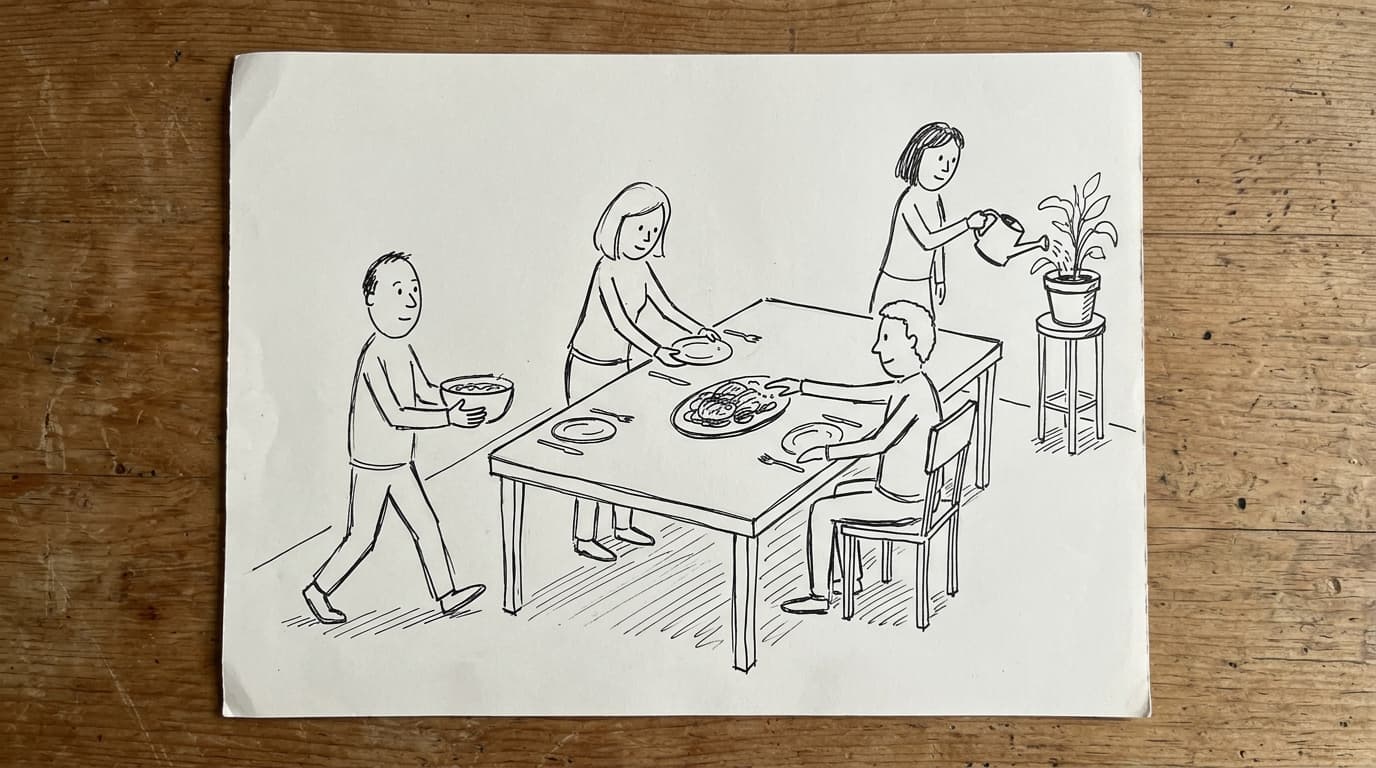
The figure approaching with a bowl suggests a role centered on active delivery and tangible contribution. In daily routines, you might be someone who enjoys bringing fresh resources or completed pieces into team spaces. Alternatively, this may simply depict the practical mechanics of mealtime logistics. Test this in your next collaborative setting: notice whether you feel most comfortable contributing once you have a tangible object or finished proposal ready in your hands.
First Opening · Overview Letter
Read the whole drawing as the first letter
The drawing features four distinct figures engaged in everyday domestic actions, balancing shared meal preparation at a central table with independent care of an indoor plant.
Visible physical actions show deliberate division of labor, including carrying food, arranging place settings, reaching for shared platters, and watering greenery.
These depicted dynamics invite reflection on personal habits of teamwork, quiet independence, and how everyday contributions are distributed within group environments.