
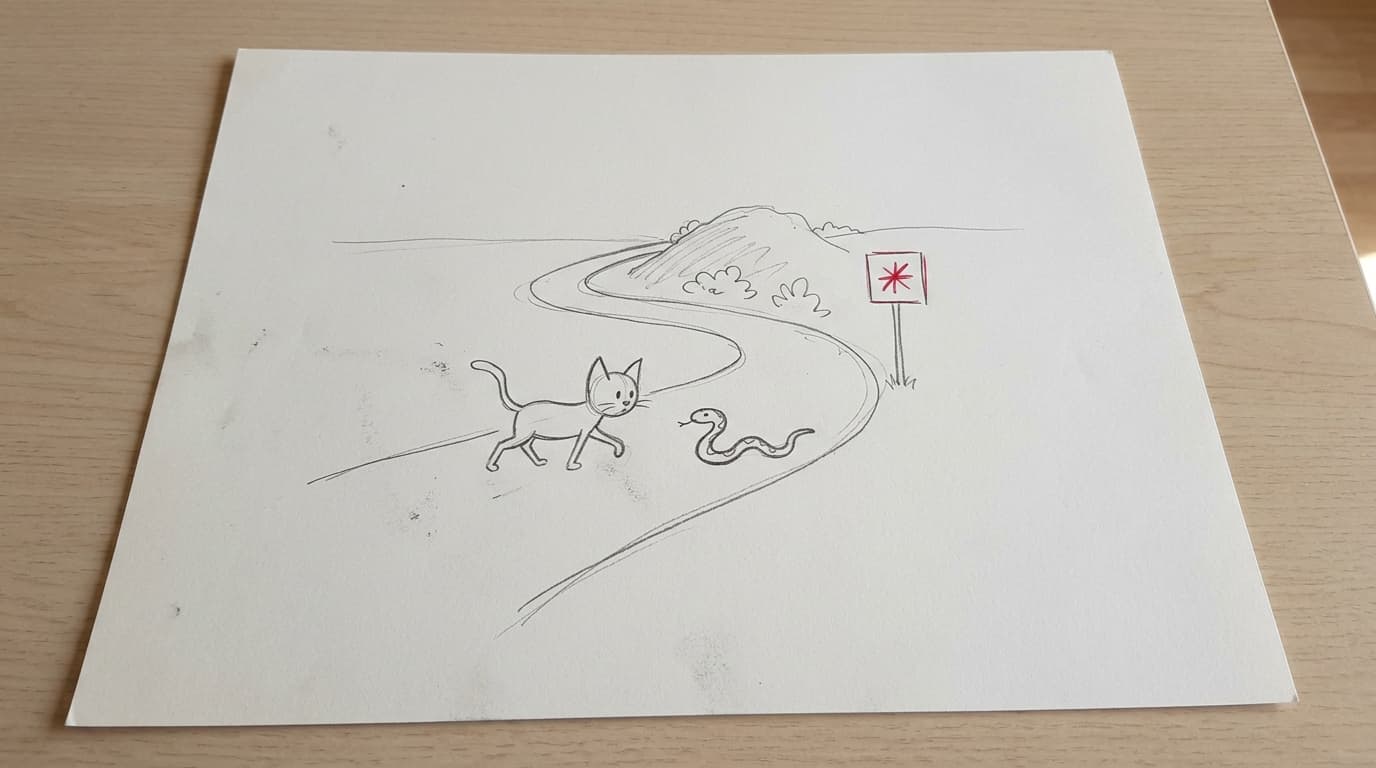
The bright red sign stands out vividly against the monochrome landscape, serving as a clear navigational point along the road. In everyday routines, clear markers or reminders often help us notice when a shift in focus is needed. Alternatively, this may simply be an artistic way to incorporate the red starter mark into a coherent road setting. You might notice this week how you respond when a planned routine presents an unexpected reminder.
First Opening · Overview Letter
Read the whole drawing as the first letter
The drawing presents a balanced narrative landscape centered on a curving path, an animal encounter, and an integrated signpost.
Selective red ink highlights the roadside sign, setting it apart from the surrounding pencil lines and drawing visual attention to navigation.
The open path beyond the hill suggests continuity and ongoing movement rather than an enclosed or blocked setting.